Muḥammad ibn Mūsā al-Khwārizmī
- Born: 780 AD, Khwarezm
- Died: 850 AD, Baghdad, Iraq
- Nationality: Iranian
- Books: The Compendious Book on Calculation by Completion and Balancing

Abū ʿAbdallāh Muḥammad ibn Mūsā al-Khwārizmī (Arabic: عَبْدَالله مُحَمَّد بِن مُوسَى اَلْخْوَارِزْمِي), earlier transliterated as Algoritmi or Algaurizin, (c. 780, Khwārizm – c. 850) was a Persian mathematician, astronomer and geographer during the Abbasid Empire, a scholar in the House of Wisdom in Baghdad.
In the twelfth century, Latin translations of his work on the Indian numerals introduced the decimal positional number system to the Western world. His Compendious Book on Calculation by Completion and Balancing presented the first systematic solution of linear and quadratic equations in Arabic. In Renaissance Europe, he was considered the original inventor of algebra, although it is now known that his work is based on older Indian or Greek sources. He revised Ptolemy's Geography and wrote on astronomy and astrology.
Some words reflect the importance of al-Khwarizmi's contributions to mathematics. "Algebra" is derived from al-jabr, one of the two operations he used to solve quadratic equations. Algorism and algorithm stem from Algoritmi, the Latin form of his name. His name is also the origin of (Spanish) guarismo and of (Portuguese) algarismo, both meaning digit.
Tag :
Muslim
Ibn al-Haytham (Alhazen)
- Born: July 1, 965 AD, Basra, Iraq
- Died: March 6, 1040, Cairo, Egypt
- Full name: Abu Ali al-Ḥasan ibn al-Ḥasan ibn al-Haytham
- Books: Book of Optics

Abū ʿAlī al-Ḥasan ibn al-Ḥasan ibn al-Haytham (Arabic: ابن الهيثم, Arabic: أبو علي، الحسن بن الحسن بن الهيثم, Latinized: Alhacen or (deprecated) Alhazen) (965 in Basra – c. 1040 in Cairo) was a Muslim scientist, polymath, mathematician, astronomer and philosopher, described in various sources as either an Arab or Persian. He made significant contributions to the principles of optics, as well as to astronomy, mathematics, visual perception, and to the scientific method. He also wrote insightful commentaries on works by Aristotle, Ptolemy, and the Greek mathematician Euclid.
He is frequently referred to as Ibn al-Haytham, and sometimes as al-Basri (Arabic: البصري), after his birthplace in the city of Basra. He was also nicknamed Ptolemaeus Secundus ("Ptolemy the Second") or simply "The Physicist" in medieval Europe.
Born circa 965, in Basra, present-day Iraq, he lived mainly in Cairo, Egypt, dying there at age 74. According to one version of his biography, overconfident about practical application of his mathematical knowledge, he assumed that he could regulate the floods of the Nile. After being ordered by Al-Hakim bi-Amr Allah, the sixth ruler of the Fatimid caliphate, to carry out this operation, he quickly perceived the impossibility of what he was attempting to do. Fearing for his life, he feigned madness and was placed under house arrest, during which he undertook scientific work. After the death of Al-Hakim he was able to prove that he was not mad, and for the rest of his life he made money copying texts while writing mathematical works and teaching. He is known as the "Father of Modern Optics, Experimental physics and Scientific methodology" and could be regarded as the first theoretical physicist.
Tag :
Muslim
Leonardo da Vinci
- Born: April 15, 1452, Vinci, Italy
- Died: May 2, 1519, Amboise, France
- Full name: Leonardo di ser Piero da Vinci
- Period: High Renaissance
- Buried: Chapel of Saint-Hubert

Leonardo di ser Piero da Vinci (April 15, 1452 – May 2, 1519) was an Italian Renaissance polymath: painter, sculptor, architect, musician, mathematician, engineer, inventor, anatomist, geologist, cartographer, botanist, and writer. His genius, perhaps more than that of any other figure, epitomized the Renaissance humanist ideal. Leonardo has often been described as the archetype of the Renaissance Man, a man of "unquenchable curiosity" and "feverishly inventive imagination". He is widely considered to be one of the greatest painters of all time and perhaps the most diversely talented person ever to have lived. According to art historian Helen Gardner, the scope and depth of his interests were without precedent and "his mind and personality seem to us superhuman, the man himself mysterious and remote". Marco Rosci states that while there is much speculation about Leonardo, his vision of the world is essentially logical rather than mysterious, and that the empirical methods he employed were unusual for his time.
Born out of wedlock to a notary, Piero da Vinci, and a peasant woman, Caterina, in Vinci in the region of Florence, Leonardo was educated in the studio of the renowned Florentine painter, Verrocchio. Much of his earlier working life was spent in the service of Ludovico il Moro in Milan. He later worked in Rome, Bologna and Venice, and he spent his last years in France at the home awarded him by Francis I.
Leonardo was, and is, renowned primarily as a painter. Among his works, the Mona Lisa is the most famous and most parodied portrait and The Last Supper the most reproduced religious painting of all time, with their fame approached only by Michelangelo's The Creation of Adam. Leonardo's drawing of the Vitruvian Man is also regarded as a cultural icon, being reproduced on items as varied as the euro coin, textbooks, and T-shirts. Perhaps fifteen of his paintings survive, the small number because of his constant, and frequently disastrous, experimentation with new techniques, and his chronic procrastination. Nevertheless, these few works, together with his notebooks, which contain drawings, scientific diagrams, and his thoughts on the nature of painting, compose a contribution to later generations of artists rivalled only by that of his contemporary, Michelangelo.
Leonardo is revered for his technological ingenuity. He conceptualised flying machines, a tank, concentrated solar power, an adding machine, and the double hull, also outlining a rudimentary theory of plate tectonics. Relatively few of his designs were constructed or were even feasible during his lifetime, but some of his smaller inventions, such as an automated bobbin winder and a machine for testing the tensile strength of wire, entered the world of manufacturing unheralded. He made important discoveries in anatomy, civil engineering, optics, and hydrodynamics, but he did not publish his findings and they had no direct influence on later science.

Tag :
Greatest
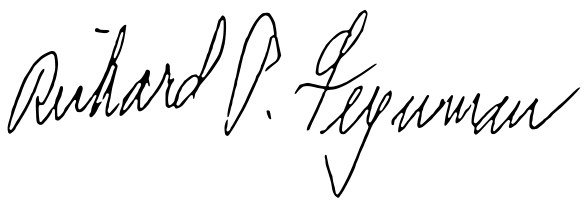
Richard Feynman
Born: May 11, 1918, Manhattan, New York City, New York, United States
Died: February 15, 1988, Los Angeles, California, United States
Children: Carl Feynman, Michelle Louise Feynman
Spouse: Gweneth Howarth (m. 1960–1988), Mary Louise Bell (m. 1952–1956), Arline Greenbaum (m. 1942–1945)
Movies: Infinity, Anti-Clock, Genghis Blues

Richard Phillips Feynman (May 11, 1918 – February 15, 1988) was an American theoretical physicist known for his work in the path integral formulation of quantum mechanics, the theory of quantum electrodynamics, and the physics of the superfluidity of supercooled liquid helium, as well as in particle physics (he proposed the parton model). For his contributions to the development of quantum electrodynamics, Feynman, jointly with Julian Schwinger and Sin-Itiro Tomonaga, received the Nobel Prize in Physics in 1965. He developed a widely used pictorial representation scheme for the mathematical expressions governing the behavior of subatomic particles, which later became known as Feynman diagrams. During his lifetime, Feynman became one of the best-known scientists in the world. In a 1999 poll of 130 leading physicists worldwide by the British journal Physics World he was ranked as one of the ten greatest physicists of all time.
He assisted in the development of the atomic bomb during World War II and became known to a wide public in the 1980s as a member of the Rogers Commission, the panel that investigated the Space Shuttle Challenger disaster. In addition to his work in theoretical physics, Feynman has been credited with pioneering the field of quantum computing and introducing the concept of nanotechnology. He held the Richard Chace Tolman professorship in theoretical physics at the California Institute of Technology.
Feynman was a keen popularizer of physics through both books and lectures, notably a 1959 talk on top-down nanotechnology called There's Plenty of Room at the Bottom, and the three-volume publication of his undergraduate lectures, The Feynman Lectures on Physics. Feynman also became known through his semi-autobiographical books Surely You're Joking, Mr. Feynman! and What Do You Care What Other People Think? and books written about him, such as Tuva or Bust!

Died: February 15, 1988, Los Angeles, California, United States
Children: Carl Feynman, Michelle Louise Feynman
Spouse: Gweneth Howarth (m. 1960–1988), Mary Louise Bell (m. 1952–1956), Arline Greenbaum (m. 1942–1945)
Movies: Infinity, Anti-Clock, Genghis Blues
Richard Phillips Feynman (May 11, 1918 – February 15, 1988) was an American theoretical physicist known for his work in the path integral formulation of quantum mechanics, the theory of quantum electrodynamics, and the physics of the superfluidity of supercooled liquid helium, as well as in particle physics (he proposed the parton model). For his contributions to the development of quantum electrodynamics, Feynman, jointly with Julian Schwinger and Sin-Itiro Tomonaga, received the Nobel Prize in Physics in 1965. He developed a widely used pictorial representation scheme for the mathematical expressions governing the behavior of subatomic particles, which later became known as Feynman diagrams. During his lifetime, Feynman became one of the best-known scientists in the world. In a 1999 poll of 130 leading physicists worldwide by the British journal Physics World he was ranked as one of the ten greatest physicists of all time.
He assisted in the development of the atomic bomb during World War II and became known to a wide public in the 1980s as a member of the Rogers Commission, the panel that investigated the Space Shuttle Challenger disaster. In addition to his work in theoretical physics, Feynman has been credited with pioneering the field of quantum computing and introducing the concept of nanotechnology. He held the Richard Chace Tolman professorship in theoretical physics at the California Institute of Technology.
Feynman was a keen popularizer of physics through both books and lectures, notably a 1959 talk on top-down nanotechnology called There's Plenty of Room at the Bottom, and the three-volume publication of his undergraduate lectures, The Feynman Lectures on Physics. Feynman also became known through his semi-autobiographical books Surely You're Joking, Mr. Feynman! and What Do You Care What Other People Think? and books written about him, such as Tuva or Bust!
Tag :
Greatest
William Thomson, 1st Baron Kelvin
- Born: June 26, 1824, Belfast, United Kingdom
- Died: December 17, 1907, Largs, United Kingdom
- Full name: William Thomson
- Awards: Copley Medal, Royal Medal, John Fritz Medal, Smith's Prize for Examination Performance
- Education: Peterhouse, Cambridge (1841–1845), University of Glasgow, Royal Belfast Academical Institution

William Thomson, 1st Baron Kelvin OM, GCVO, PC, PRS, PRSE, (26 June 1824 – 17 December 1907) was an Irish and British mathematical physicist and engineer who was born in Belfast in 1824. At the University of Glasgow he did important work in the mathematical analysis of electricity and formulation of the first and second laws of thermodynamics, and did much to unify the emerging discipline of physics in its modern form. He worked closely with mathematics professor Hugh Blackburn in his work. He also had a career as an electric telegraph engineer and inventor, which propelled him into the public eye and ensured his wealth, fame and honour. For his work on the transatlantic telegraph project he was knighted by Queen Victoria, becoming Sir William Thomson. He had extensive maritime interests and was most noted for his work on the mariner's compass, which had previously been limited in reliability.
Lord Kelvin is widely known for determining the correct value of absolute zero as approximately -273.15 Celsius. The existence of a lower limit to temperature was known prior to Lord Kelvin, as shown in "Reflections on the Motive Power of Heat", published by Sadi Carnot in French in 1824, the year of Lord Kelvin's birth. "Reflections" used -267 as an estimate of the absolute zero temperature. Absolute temperatures are stated in units of kelvin in his honour.
On his ennoblement in 1892 in honour of his achievements in thermodynamics, and of his opposition to Irish Home Rule, he adopted the title Baron Kelvin, of Largs in the County of Ayr and is therefore often described as Lord Kelvin. He was the first UK scientist to be elevated to the House of Lords. The title refers to the River Kelvin, which flows close by his laboratory at the University of Glasgow. His home was the imposing red sandstone mansion Netherhall, in Largs on the Firth of Clyde. Despite offers of elevated posts from several world renowned universities Lord Kelvin refused to leave Glasgow, remaining Professor of Natural Philosophy for over 50 years, until his eventual retirement from that post. The Hunterian Museum at the University of Glasgow has a permanent exhibition on the work of Lord Kelvin including many of his original papers, instruments and other artefacts such as his smoking pipe.
Always active in industrial research and development, he was recruited around 1899 by George Eastman to serve as vice-chairman of the board of the British company Kodak Limited, affiliated with Eastman Kodak.

Tag :
Greatest
Archimedes
- Born: 287 BC, Syracuse, Italy
- Full name: Archimedes of Syracuse
- Nationality: Greek
- Assassinated: 212 BC, Syracuse, Italy
- Parents: Phidias

Archimedes of Syracuse (287 BC – c.212 BC) was a Greek mathematician, physicist, engineer, inventor, and astronomer. Although few details of his life are known, he is regarded as one of the leading scientists in classical antiquity. Among his advances in physics are the foundations of hydrostatics, statics and an explanation of the principle of the lever. He is credited with designing innovative machines, including siege engines and the screw pump that bears his name. Modern experiments have tested claims that Archimedes designed machines capable of lifting attacking ships out of the water and setting ships on fire using an array of mirrors.
Archimedes is generally considered to be the greatest mathematician of antiquity and one of the greatest of all time. He used the method of exhaustion to calculate the area under the arc of a parabola with the summation of an infinite series, and gave a remarkably accurate approximation of pi. He also defined the spiral bearing his name, formulae for the volumes of solids of revolution, and an ingenious system for expressing very large numbers.
Archimedes died during the Siege of Syracuse when he was killed by a Roman soldier despite orders that he should not be harmed. Cicero describes visiting the tomb of Archimedes, which was surmounted by a sphere inscribed within a cylinder. Archimedes had proven that the sphere has two thirds of the volume and surface area of the cylinder (including the bases of the latter), and regarded this as the greatest of his mathematical achievements.
Unlike his inventions, the mathematical writings of Archimedes were little known in antiquity. Mathematicians from Alexandria read and quoted him, but the first comprehensive compilation was not made until c. 530 AD by Isidore of Miletus, while commentaries on the works of Archimedes written by Eutocius in the sixth century AD opened them to wider readership for the first time. The relatively few copies of Archimedes' written work that survived through the Middle Ages were an influential source of ideas for scientists during the Renaissance, while the discovery in 1906 of previously unknown works by Archimedes in the Archimedes Palimpsest has provided new insights into how he obtained mathematical results.
Tag :
Greatest
Niels Henrik David Bohr
- Born: October 7, 1885, Copenhagen, Denmark
- Died: November 18, 1962, Copenhagen, Denmark
- Nationality: Danish
- Awards: Nobel Prize in Physics, Copley Medal, Max Planck Medal, More
- Education: University of Copenhagen (1911), More
- Children: Aage Bohr, Ernest Bohr, Hans Henrik Bohr, Erik Bohr, Christian Bohr, Harald Bohr

Niels Henrik David Bohr (7 October 1885 – 18 November 1962) was a Danish physicist who made foundational contributions to understanding atomic structure and quantum theory, for which he received the Nobel Prize in Physics in 1922. Bohr was also a philosopher and a promoter of scientific research.
Bohr developed the Bohr model of the atom, in which he proposed that energy levels of electrons are discrete, and that the electrons revolve in stable orbits around the atomic nucleus, but can jump from one energy level (or orbit) to another. Although the Bohr model has been supplanted by other models, its underlying principles remain valid. He conceived the principle of complementarity: that items could be separately analysed in terms of contradictory properties, like behaving as a wave or a stream of particles. The notion of complementarity dominated Bohr's thinking on both science and philosophy.
Bohr founded the Institute of Theoretical Physics at the University of Copenhagen, now known as the Niels Bohr Institute, which opened in 1920. Bohr mentored and collaborated with physicists including Hans Kramers, Oskar Klein, George de Hevesy and Werner Heisenberg. He predicted the existence of a new zirconium-like element, which was named hafnium, after the Latin name for Copenhagen, where it was discovered. Later, the element bohrium was named after him.
During the 1930s, Bohr helped refugees from Nazism. After Denmark was occupied by the Germans, he had a famous meeting with Heisenberg, who had become the head of the German nuclear energy project. In September 1943, word reached Bohr that he was about to be arrested by the Germans, and he fled to Sweden. From there, he was flown to Britain, where he joined the British Tube Alloys nuclear weapons project, and was part of the British mission to the Manhattan Project. After the war, Bohr called for international cooperation on nuclear energy. He was involved with the establishment of CERN and the Research Establishment Risø of the Danish Atomic Energy Commission, and became the first chairman of the Nordic Institute for Theoretical Physics in 1957.

Tag :
Greatest
Johannes Kepler
- Born: December 27, 1571, Weil der Stadt, Germany
- Died: November 15, 1630, Regensburg, Germany
- Education: Tübinger Stift
- Children: Sebald Kepler, Heinrich Kepler, Ludwig Kepler, More
- Parents: Katharina Kepler, Heinrich Kepler

Johannes Kepler (December 27, 1571 – November 15, 1630) was a German mathematician, astronomer and astrologer. A key figure in the 17th century scientific revolution, he is best known for his eponymous laws of planetary motion, codified by later astronomers, based on his works Astronomia nova, Harmonices Mundi, and Epitome of Copernican Astronomy. These works also provided one of the foundations for Isaac Newton's theory of universal gravitation.
During his career, Kepler was a mathematics teacher at a seminary school in Graz, Austria, where he became an associate of Prince Hans Ulrich von Eggenberg. Later he became an assistant to astronomer Tycho Brahe, and eventually the imperial mathematician to Emperor Rudolf II and his two successors Matthias and Ferdinand II. He was also a mathematics teacher in Linz, Austria, and an adviser to General Wallenstein. Additionally, he did fundamental work in the field of optics, invented an improved version of the refracting telescope (the Keplerian Telescope), and mentioned the telescopic discoveries of his contemporary Galileo Galilei.
Kepler lived in an era when there was no clear distinction between astronomy and astrology, but there was a strong division between astronomy (a branch of mathematics within the liberal arts) and physics (a branch of natural philosophy). Kepler also incorporated religious arguments and reasoning into his work, motivated by the religious conviction and belief that God had created the world according to an intelligible plan that is accessible through the natural light of reason. Kepler described his new astronomy as "celestial physics", as "an excursion into Aristotle's Metaphysics", and as "a supplement to Aristotle's On the Heavens", transforming the ancient tradition of physical cosmology by treating astronomy as part of a universal mathematical physics

Tag :
Greatest
Max Born
- Born: December 11, 1882, Wrocław, Poland
- Died: January 5, 1970, Göttingen, Germany
- Children: Irene Born, Gritli Born
- Education: University of Göttingen, Wrocław University, Gonville and Caius College, Cambridge
- Awards: Nobel Prize in Physics, Max Planck Medal, Hughes Medal
- Books: Principles of Optics, Dynamical Theory of Crystal Lattices, The Born-Einstein Letters, The Restless Universe, Atomic Physics, Problems of Atomic Dynamics: Two Series of Lectures On: I. The Structure of the Atom (20 Lectures) II. The Lattice Theory of Rigid Bodies. (10 Lectures), Physics in My Generation, Einstein's Theory of Relativity

Max Born (11 December 1882 – 5 January 1970) was a German physicist and mathematician who was instrumental in the development of quantum mechanics. He also made contributions to solid-state physics and optics and supervised the work of a number of notable physicists in the 1920s and 30s. Born won the 1954 Nobel Prize in Physics for his "fundamental research in Quantum Mechanics, especially in the statistical interpretation of the wave function".

Tag :
Greatest
Michael Faraday
- Born: September 22, 1791, Newington Butts, United Kingdom
- Died: August 25, 1867, Hampton Court Palace, Molesey, United Kingdom
- Parents: James Faraday
- Spouse: Sarah Barnard (m. 1821)
- Awards: Copley Medal, Royal Medal, Rumford Medal

Michael Faraday, FRS (22 September 1791 – 25 August 1867) was an English scientist who contributed to the fields of electromagnetism and electrochemistry. His main discoveries include those of electromagnetic induction, diamagnetism and electrolysis.
Although Faraday received little formal education he was one of the most influential scientists in history. It was by his research on the magnetic field around a conductor carrying a direct current that Faraday established the basis for the concept of the electromagnetic field in physics. Faraday also established that magnetism could affect rays of light and that there was an underlying relationship between the two phenomena. He similarly discovered the principle of electromagnetic induction, diamagnetism, and the laws of electrolysis. His inventions of electromagnetic rotary devices formed the foundation of electric motor technology, and it was largely due to his efforts that electricity became practical for use in technology.
As a chemist, Faraday discovered benzene, investigated the clathrate hydrate of chlorine, invented an early form of the Bunsen burner and the system of oxidation numbers, and popularised terminology such as anode, cathode, electrode, and ion. Faraday ultimately became the first and foremost Fullerian Professor of Chemistry at the Royal Institution of Great Britain, a lifetime position.
Faraday was an excellent experimentalist who conveyed his ideas in clear and simple language; his mathematical abilities, however, did not extend as far as trigonometry or any but the simplest algebra. James Clerk Maxwell took the work of Faraday and others, and summarized it in a set of equations that is accepted as the basis of all modern theories of electromagnetic phenomena. On Faraday's uses of the lines of force, Maxwell wrote that they show Faraday "to have been in reality a mathematician of a very high order – one from whom the mathematicians of the future may derive valuable and fertile methods." The SI unit of capacitance, the farad, is named in his honour.
Albert Einstein kept a picture of Faraday on his study wall, alongside pictures of Isaac Newton and James Clerk Maxwell. Physicist Ernest Rutherford stated; "When we consider the magnitude and extent of his discoveries and their influence on the progress of science and of industry, there is no honour too great to pay to the memory of Faraday, one of the greatest scientific discoverers of all time".

Tag :
Greatest
Alessandro Giuseppe Antonio Anastasio Volta
Born: February 18, 1745, Como, Italy
Died: March 5, 1827, Como, Italy
Full name: Alessandro Giuseppe Antonio Anastasio Gerolamo Umberto Volta
Spouse: Teresa Peregrini (m. 1794)
Awards: Copley Medal
Children: Zanino Volta, Flaminio Volta, Giovanni Volta

Alessandro Giuseppe Antonio Anastasio Volta (18 February 1745 – 5 March 1827) was an Italian physicist known for the invention of the battery in the 1800s.
Volta was born in Como, a town in present-day northern Italy (near the Swiss border) on February 18, 1745. In 1774, he became a professor of physics at the Royal School in Como. A year later, he improved and popularized the electrophorus, a device that produced static electricity. His promotion of it was so extensive that he is often credited with its invention, even though a machine operating on the same principle was described in 1762 by the Swedish experimenter Johan Wilcke.
In the years between 1776–78, Volta studied the chemistry of gases. He discovered methane after reading a paper by Benjamin Franklin of America on "flammable air", and Volta searched for it carefully in Italy. In November, 1776, he found methane at Lake Maggiore, and by 1778 he managed to isolate methane. He devised experiments such as the ignition of methane by an electric spark in a closed vessel. Volta also studied what we now call electrical capacitance, developing separate means to study both electrical potential (V ) and charge (Q ), and discovering that for a given object, they are proportional. This may be called Volta's Law of capacitance, and it was for this work the unit of electrical potential has been named the volt.
In 1779 he became a professor of experimental physics at the University of Pavia, a chair that he occupied for almost 40 years. In 1794, Volta married an aristocratic lady also from Como, Teresa Peregrini, with whom he raised three sons: Giovanni, Flaminio and Zanino.
Died: March 5, 1827, Como, Italy
Full name: Alessandro Giuseppe Antonio Anastasio Gerolamo Umberto Volta
Spouse: Teresa Peregrini (m. 1794)
Awards: Copley Medal
Children: Zanino Volta, Flaminio Volta, Giovanni Volta

Volta was born in Como, a town in present-day northern Italy (near the Swiss border) on February 18, 1745. In 1774, he became a professor of physics at the Royal School in Como. A year later, he improved and popularized the electrophorus, a device that produced static electricity. His promotion of it was so extensive that he is often credited with its invention, even though a machine operating on the same principle was described in 1762 by the Swedish experimenter Johan Wilcke.
In the years between 1776–78, Volta studied the chemistry of gases. He discovered methane after reading a paper by Benjamin Franklin of America on "flammable air", and Volta searched for it carefully in Italy. In November, 1776, he found methane at Lake Maggiore, and by 1778 he managed to isolate methane. He devised experiments such as the ignition of methane by an electric spark in a closed vessel. Volta also studied what we now call electrical capacitance, developing separate means to study both electrical potential (V ) and charge (Q ), and discovering that for a given object, they are proportional. This may be called Volta's Law of capacitance, and it was for this work the unit of electrical potential has been named the volt.
In 1779 he became a professor of experimental physics at the University of Pavia, a chair that he occupied for almost 40 years. In 1794, Volta married an aristocratic lady also from Como, Teresa Peregrini, with whom he raised three sons: Giovanni, Flaminio and Zanino.
Tag :
Greatest
Thomas Edison
- Born: February 11, 1847, Milan, Ohio, United States
- Died: October 18, 1931, West Orange, New Jersey, United States
- Full name: Thomas Alva Edison
- Awards: Congressional Gold Medal, Distinguished Service Medal, More
- Children: Theodore Miller Edison, Charles Edison, Madeleine Edison, William Leslie Edison, Marion Estelle Edison, Thomas Alva Edison Jr.

Thomas Alva Edison (February 11, 1847 – October 18, 1931) was an American inventor and businessman. He developed many devices that greatly influenced life around the world, including the phonograph, the motion picture camera, and a long-lasting, practical electric light bulb. Dubbed "The Wizard of Menlo Park", he was one of the first inventors to apply the principles of mass production and large-scale teamwork to the process of invention, and because of that, he is often credited with the creation of the first industrial research laboratory.
Edison is the fourth most prolific inventor in history, holding 1,093 US patents in his name, as well as many patents in the United Kingdom, France, and Germany. More significant than the number of Edison's patents, are the impacts of his inventions, because Edison not only invented things, his inventions established major new industries world-wide, notably, electric light and power utilities, sound recording and motion pictures.
Edison's inventions contributed to mass communication and, in particular, telecommunications. These included a stock ticker, a mechanical vote recorder, a battery for an electric car, electrical power, recorded music and motion pictures.
His advanced work in these fields was an outgrowth of his early career as a telegraph operator. Edison developed a system of electric-power generation and distribution to homes, businesses, and factories – a crucial development in the modern industrialized world. His first power station was on Pearl Street in Manhattan, New York.

Tag :
Greatest
James Clerk Maxwell
- Born: June 13, 1831, Edinburgh, United Kingdom
- Died: November 5, 1879, Cambridge, United Kingdom
- Full name: James Clerk Maxwell
- Awards: Rumford Medal
- Education: University of Edinburgh, Trinity College, Cambridge, Edinburgh Academy, University of Cambridge, Peterhouse, Cambridge

James Clerk Maxwell FRS FRSE (13 June 1831 – 5 November 1879) was a Scottish mathematical physicist. His most prominent achievement was to formulate a set of equations that describe electricity, magnetism, and optics as manifestations of the same phenomenon, namely the electromagnetic field. Maxwell's achievements concerning electromagnetism have been called the "second great unification in physics", after the first one realised by Isaac Newton.
With the publication of A Dynamical Theory of the Electromagnetic Field in 1865, Maxwell demonstrated that electric and magnetic fields travel through space as waves moving at the speed of light. Maxwell proposed that light is in fact undulations in the same medium that is the cause of electric and magnetic phenomena. The unification of light and electrical phenomena led to the prediction of the existence of radio waves.
Maxwell helped develop the Maxwell–Boltzmann distribution, which is a statistical means of describing aspects of the kinetic theory of gases. He is also known for presenting the first durable colour photograph in 1861 and for his foundational work on analysing the rigidity of rod-and-joint frameworks (trusses) like those in many bridges.
His discoveries helped usher in the era of modern physics, laying the foundation for such fields as special relativity and quantum mechanics. Many physicists regard Maxwell as the 19th-century scientist having the greatest influence on 20th-century physics, and his contributions to the science are considered by many to be of the same magnitude as those of Isaac Newton and Albert Einstein. In the millennium poll—a survey of the 100 most prominent physicists—Maxwell was voted the third greatest physicist of all time, behind only Newton and Einstein. On the centenary of Maxwell's birthday, Einstein himself described Maxwell's work as the "most profound and the most fruitful that physics has experienced since the time of Newton."

Tag :
Greatest
Otto Hahn
- Born: March 8, 1879, Frankfurt, Germany
- Died: July 28, 1968, Göttingen, Germany
- Awards: Nobel Prize in Chemistry, Enrico Fermi Award, More
- Education: Philipps University of Marburg, Humboldt University of Berlin

Otto Hahn, (8 March 1879 – 28 July 1968) was a German chemist and pioneer in the fields of radioactivity and radiochemistry who won the Nobel Prize in Chemistry for the discovery of nuclear fission. He is regarded as one of the most significant chemists of all times and especially as "the father of nuclear chemistry".
Hahn was an opponent of Jewish persecution by the Nazi Party and after World War II he became a passionate campaigner against the use of nuclear energy as a weapon. He served as the last President of the Kaiser Wilhelm Society (KWG) in 1946 and as the founding President of the Max Planck Society (MPG) from 1948 to 1960. Considered by many to be a model for scholarly excellence and personal integrity, he became one of the most influential and revered citizens of the new Federal Republic of Germany

Tag :
Greatest
Charles Darwin
- Born: February 12, 1809, The Mount, Shrewsbury, United Kingdom
- Died: April 19, 1882, Down House, United Kingdom
- Children: Anne Darwin, George Darwin, Francis Darwin, More
- Awards: Copley Medal, Royal Medal, Wollaston Medal
- Education: Christ's College, Cambridge (1828–1831), University of Edinburgh (1825–1827), Shrewsbury School, University of Edinburgh Medical School, University of Cambridge

Charles Robert Darwin, FRS (12 February 1809 – 19 April 1882) was an English naturalist and geologist, best known for his contributions to evolutionary theory. He established that all species of life have descended over time from common ancestors, and in a joint publication with Alfred Russel Wallace introduced his scientific theory that this branching pattern of evolution resulted from a process that he called natural selection, in which the struggle for existence has a similar effect to the artificial selection involved in selective breeding.
Darwin published his theory of evolution with compelling evidence in his 1859 book On the Origin of Species, overcoming scientific rejection of earlier concepts of transmutation of species. By the 1870s the scientific community and much of the general public had accepted evolution as a fact. However, many favoured competing explanations and it was not until the emergence of the modern evolutionary synthesis from the 1930s to the 1950s that a broad consensus developed in which natural selection was the basic mechanism of evolution. In modified form, Darwin's scientific discovery is the unifying theory of the life sciences, explaining the diversity of life.
Darwin's early interest in nature led him to neglect his medical education at the University of Edinburgh; instead, he helped to investigate marine invertebrates. Studies at the University of Cambridge encouraged his passion for natural science. His five-year voyage on HMS Beagle established him as an eminent geologist whose observations and theories supported Charles Lyell's uniformitarian ideas, and publication of his journal of the voyage made him famous as a popular author.
Puzzled by the geographical distribution of wildlife and fossils he collected on the voyage, Darwin began detailed investigations and in 1838 conceived his theory of natural selection. Although he discussed his ideas with several naturalists, he needed time for extensive research and his geological work had priority. He was writing up his theory in 1858 when Alfred Russel Wallace sent him an essay which described the same idea, prompting immediate joint publication of both of their theories. Darwin's work established evolutionary descent with modification as the dominant scientific explanation of diversification in nature. In 1871 he examined human evolution and sexual selection in The Descent of Man, and Selection in Relation to Sex, followed by The Expression of the Emotions in Man and Animals. His research on plants was published in a series of books, and in his final book, he examined earthworms and their effect on soil.
In recognition of Darwin's pre-eminence as a scientist, he was honoured with a major ceremonial funeral and buried in Westminster Abbey, close to John Herschel and Isaac Newton. Darwin has been described as one of the most influential figures in human history.

Tag :
Greatest
Marie Curie
- Born: November 7, 1867, Warsaw, Poland
- Died: July 4, 1934, Passy, Haute-Savoie, France
- Discovered: Radium, Polonium
- Education: University of Paris (1903), University of Paris (1894), University of Paris (1891–1893)
- Children: Irène Joliot-Curie, Ève Curie
- Awards: Nobel Prize in Physics, Nobel Prize in Chemistry, Elliott Cresson Medal, Davy Medal, Matteucci Medal, John Scott Legacy Medal and Premium, Benjamin Franklin Medal
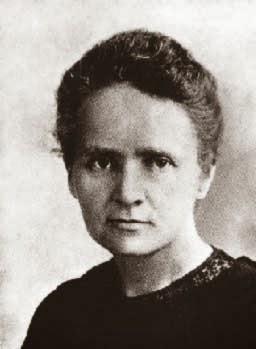
Marie Skłodowska-Curie (7 November 1867 – 4 July 1934) was a Polish and naturalized-French physicist and chemist, famous for her pioneering research on radioactivity. She was the first woman to win a Nobel Prize, the only woman to win in two fields, and the only person to win in multiple sciences. She was also the first female professor at the University of Paris, and in 1995 became the first woman to be entombed on her own merits in the Panthéon in Paris.
She was born Maria Salomea Skłodowska (pronounced) in Warsaw, in what was then the Kingdom of Poland, part of the Russian Empire. She studied at Warsaw's clandestine Floating University and began her practical scientific training in Warsaw. In 1891, aged 24, she followed her older sister Bronisława to study in Paris, where she earned her higher degrees and conducted her subsequent scientific work. She shared the 1903 Nobel Prize in Physics with her husband Pierre Curie and with physicist Henri Becquerel. She won the 1911 Nobel Prize in Chemistry.
Her achievements included a theory of radioactivity (a term that she coined), techniques for isolating radioactive isotopes, and the discovery of two elements, polonium and radium. Under her direction, the world's first studies were conducted into the treatment of neoplasms, using radioactive isotopes. She founded the Curie Institutes in Paris and in Warsaw, which remain major centres of medical research today. During World War I, she established the first military field radiological centres.
While a French citizen, Marie Skłodowska Curie (she used both surnames) never lost her sense of Polish identity. She taught her daughters the Polish language and took them on visits to Poland. She named the first chemical element that she discovered – polonium, which she first isolated in 1898 – after her native country.
Curie died in 1934 at the sanatorium of Sancellemoz (Haute-Savoie), France, due to aplastic anemia brought on by exposure to radiation – mainly, it seems, during her World War I service in mobile x-ray units created by her.

Tag :
Greatest
Nikola Tesla
- Born: July 10, 1856, Smiljan, Croatia
- Died: January 7, 1943, New Yorker Hotel, New York City, New York, United States
- Full name: Nikola Tesla
- Awards: Elliott Cresson Medal, IEEE Edison Medal, John Scott Legacy Medal and Premium
- Education: Graz University of Technology (1875–1878), Gymnasium Karlovac (1870–1873)

Nikola Tesla (10 July 1856 – 7 January 1943) was a Serbian American inventor, electrical engineer, mechanical engineer, physicist, and futurist best known for his contributions to the design of the modern alternating current (AC) electricity supply system.
Tesla gained experience in telephony and electrical engineering before emigrating to the United States in 1884 to work for Thomas Edison. He soon struck out on his own with financial backers, setting up laboratories and companies to develop a range of electrical devices. His patented AC induction motor and transformer were licensed by George Westinghouse, who also hired Tesla as a consultant to help develop a power system using alternating current. Tesla is also known for his high-voltage, high-frequency power experiments in New York and Colorado Springs which included patented devices and theoretical work used in the invention of radio communication, for his X-ray experiments, and for his ill-fated attempt at intercontinental wireless transmission in his unfinished Wardenclyffe Tower project.
Tesla's achievements and his abilities as a showman demonstrating his seemingly miraculous inventions made him world-famous. Although he made a great deal of money from his patents, he spent a lot on numerous experiments. He lived for most of his life in a series of New York hotels although the end of his patent income and eventual bankruptcy led him to live in diminished circumstances. Tesla still continued to invite the press to parties he held on his birthday to announce new inventions he was working and make (sometimes unusual) statements. Because of his pronouncements and the nature of his work over the years, Tesla gained a reputation in popular culture as the archetypal "mad scientist". He died on 7 January 1943.
Tesla's work fell into relative obscurity after his death, but since the 1990s, his reputation has experienced a comeback in popular culture. His work and reputed inventions are also at the center of many conspiracy theories and have also been used to support various pseudosciences, UFO theories and New Age occultism. In 1960, in honor of Tesla, the General Conference on Weights and Measures for the International System of Units dedicated the term "tesla" to the SI unit measure for magnetic field strength.

Tag :
Greatest
Aristotle
- Born: 384 BC, Stagira, Greece
- Died: 322 BC, Chalcis, Greece
- Full name: Aristotle
- Education: Platonic Academy (367 BC–347 BC)
- Children: Nicomachus, Pythias

Aristotle (384 BCE – 322 BCE) was a Greek philosopher born in Stagirus in 384 BCE. His father, Nicomachus died when Aristotle was a child and he lived under a guardian's care. At the age of eighteen, he joined Plato’s Academy in Athens and continued to stay until the age of thirty-seven, around 347 BCE. His writings cover many subjects, including physics, metaphysics, poetry, theater, music, logic, rhetoric, linguistics, politics, government, ethics, biology, and zoology. Aristotle's writings were the first to create a comprehensive system of Western philosophy, encompassing ethics, aesthetics, logic, science, politics, and metaphysics. Shortly after Plato died Aristotle left Athens. With the request of Philip of Macedonia he became a tutor for Alexander in 356-323 BCE.
Aristotle achieved merit through teaching Alexander the Great. This distinction allowed him many opportunities, including an abundance of supplies. He established a library in the Lyceum with which many of his hundreds of books were produced. The fact that Aristotle was a pupil of Plato contributed to his former views of Platonism, but following Plato’s death, Aristotle immersed himself in empirical studies and shifted from Platonism to empiricism . He believed all peoples concepts and all of their knowledge was ultimately based on perception. Aristotle’s views on natural sciences, including philosophy of the mind, body, sensory experience, memory, and biology represent the groundwork underlying many of his works. Many aspects of Aristotelian thought remain an active academic study, however, many of his writing are now lost with only one-third of his original works still surviving .
Aristotle's views on the physical sciences profoundly shaped medieval scholarship, and their influence extended well into the Renaissance, although they were ultimately replaced by Newtonian physics. In the zoological sciences, some of his observations were confirmed to be accurate only in the 19th century. His works contain the earliest known formal study of logic, which was incorporated in the late 19th century into modern formal logic.
In metaphysics, Aristotelianism had a profound influence on philosophical and theological thinking in the Islamic and Jewish traditions in the Middle Ages, and it continues to influence Christian theology, especially the scholastic tradition of the Catholic Church. Aristotle was well known among medieval Muslim intellectuals and revered as 'المعلم الأول' – "The First Teacher".
His ethics, though always influential, gained renewed interest with the modern advent of virtue ethics. All aspects of Aristotle's philosophy continue to be the object of active academic study today. Though Aristotle wrote many elegant treatises and dialogues (Cicero described his literary style as "a river of gold"), it is thought that the majority of his writings are now lost and only about one-third of the original works have survived
Tag :
Greatest
Galileo Galilei
- Born: February 15, 1564, Pisa, Italy
- Died: January 8, 1642, Arcetri, Italy
- Education: University of Pisa (1581–1585)
- Discovered: Callisto, Galilean moons, Europa, Ganymede, Io
- Children: Maria Celeste, Vincenzo Gamba, Livia Galilei
- Books: Sidereus Nuncius, The Assayer

Galileo Galilei (15 February 1564 – 8 January 1642), often known mononymously as Galileo, was an Italian physicist, mathematician, astronomer, and philosopher who played a major role in the Scientific Revolution. His achievements include improvements to the telescope and consequent astronomical observations and support for Copernicanism. Galileo has been called the "father of modern observational astronomy", the "father of modern physics", the "father of science", and "the Father of Modern Science".
His contributions to observational astronomy include the telescopic confirmation of the phases of Venus, the discovery of the four largest satellites of Jupiter (named the Galilean moons in his honour), and the observation and analysis of sunspots. Galileo also worked in applied science and technology, inventing an improved military compass and other instruments.
Galileo's championing of heliocentrism was controversial within his lifetime, when most subscribed to either geocentrism or the Tychonic system. He met with opposition from astronomers, who doubted heliocentrism due to the absence of an observed stellar parallax. The matter was investigated by the Roman Inquisition in 1615, and they concluded that it could be supported as only a possibility, not an established fact. Galileo later defended his views in Dialogue Concerning the Two Chief World Systems, which appeared to attack Pope Urban VIII and thus alienated him and the Jesuits, who had both supported Galileo up until this point. He was tried by the Inquisition, found "vehemently suspect of heresy", forced to recant, and spent the rest of his life under house arrest. It was while Galileo was under house arrest that he wrote one of his finest works, Two New Sciences, in which he summarised the work he had done some forty years earlier, on the two sciences now called kinematics and strength of materials.

Tag :
Greatest
Louis Pasteur
- Born: December 27, 1822, Dole, France
- Died: September 28, 1895, Marnes-la-Coquette, France
- Education: École Normale Supérieure (1844–1845)
- Spouse: Marie Pasteur (m. 1849–1895)
- Awards: Copley Medal, Montyon Prizes, Rumford Medal, Leeuwenhoek Medal
- Children: Jean Baptiste Pasteur, Marie Louise Pasteur, Jeanne Pasteur, Cécile Pasteur, Camile Pasteur

Louis Pasteur (December 27, 1822 – September 28, 1895) was a French chemist and microbiologist who is well known for his discoveries of the principles of vaccination, microbial fermentation and pasteurization. He is remembered for his remarkable breakthroughs in the causes and preventions of diseases, and his discoveries have saved countless lives ever since. Pasteur reduced mortality from puerperal fever, and created the first vaccines for rabies and anthrax. His medical discoveries provided direct support for the germ theory of disease and its application in clinical medicine. Pasteur is best known to the general public for his invention of the technique of treating milk and wine to stop bacterial contamination, a process now called pasteurization. He is regarded as one of the three main founders of bacteriology, together with Ferdinand Cohn and Robert Koch, and is popularly known as the "father of microbiology".
Pasteur also made significant discoveries in chemistry, most notably on the molecular basis for the asymmetry of certain crystals and racemization. He was the Director of the Pasteur Institute, established in 1887, till his death, and his body lies beneath the institute in a vault covered in depictions of his accomplishments in Byzantine mosaics.

Tag :
Greatest


